On-Site Wound Closure: Why Your Fighters Shouldn't Be Waiting in A&E
Central Ambulance Service · 14 July 2026
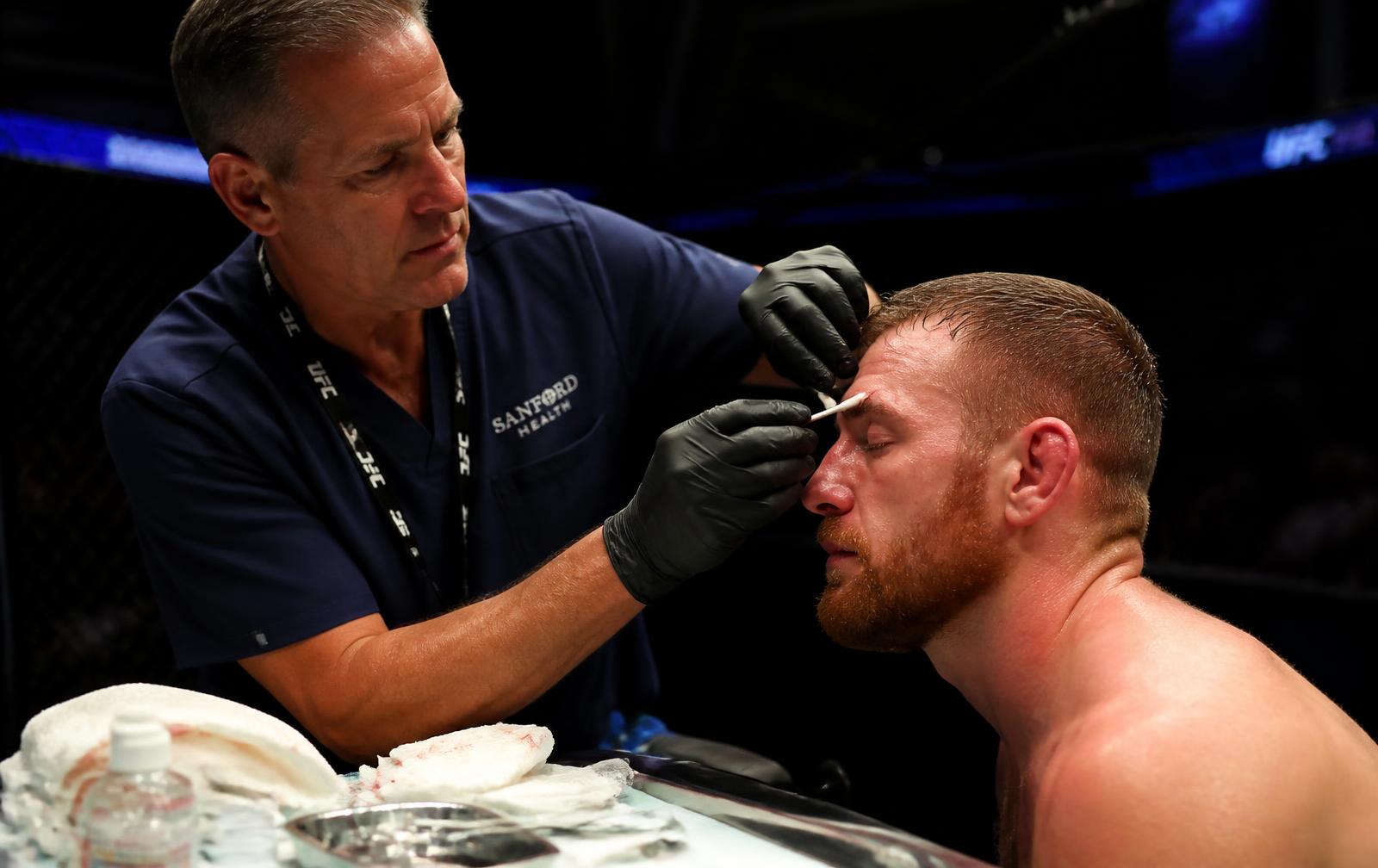
Cuts are part of combat sports. A clash of heads in round two, an elbow that lands clean, a cut re-opened from a previous camp — lacerations are the single most common injury our doctors treat at professional boxing and MMA events. What differs enormously between promotions is what happens next.
At many shows, the answer is simple and unsatisfying: the fighter is told to make their own way to the local emergency department. They sit for three or four hours in a waiting room, still in their fight kit, adrenaline gone, hungry and cold, before a clinician who has never worked a combat sports event closes the wound.
The clinical case for closing wounds at the venue
Time matters. Most clean lacerations are best closed within a few hours of injury, before tissue oedema and bacterial colonisation make apposition harder and increase infection risk. A wound closed cageside by an experienced doctor, with sterile technique and proper irrigation, generally produces a tidier scar and a lower complication rate than the same wound closed six hours later.
Experience matters just as much. Combat sports lacerations are not ordinary cuts. Facial anatomy around the brow and eyelid is unforgiving, and closure decisions affect whether a fighter is cleared to compete again in eight weeks or six months. Our doctors have closed thousands of these wounds at elite promotions, and that pattern recognition is what tells us which wounds are safely managed at the venue and which need hospital assessment.
The commercial case for the promoter
Fighters talk. The experience they have after the final bell shapes what they tell their gym, their manager and their matchmaker about your show. A fighter who is assessed, closed and released within twenty minutes of leaving the cage goes home that night. A fighter sent to A&E remembers your event for the wrong reasons.
There is also an operational benefit. Every fighter who does not need transport keeps your ambulance capacity on site, where it belongs, and avoids the awkward pause where a show cannot continue because the only vehicle is halfway to hospital.
Knowing when not to treat on site
On-site capability is only valuable when it is paired with disciplined escalation. Suspected head injury with red flag features, deep wounds involving the lid margin or lacrimal system, injuries with neurovascular compromise, suspected fractures requiring imaging, and any fighter whose observations do not settle are transferred — and our vehicles are fully equipped, blue-light capable emergency ambulances with crews trained for exactly that.
Professional judgment is the product. Treating everything on site is reckless; treating nothing on site is lazy. Twenty years at UFC, Cage Warriors, PFL, Bellator, BKFC, Misfits Boxing and MF Pro is what tells the difference.
Central Ambulance Service provides doctor-led medical event management for UK combat sports. See our services or read how we protect your promotion on the compliance page.